What makes Kamchatka a high-risk earthquake and volcano zone
Why Russia’s Kamchatka shakes so often: The science behind the seismic hotspot
- By Gurmehar --
- Monday, 04 Aug, 2025
On July 30, 2025, a massive earthquake shook the Kamchatka Peninsula, located in the far east of Russia. According to the National Centre for Seismology (NCS), the earthquake was measured at a magnitude of 7.8 and struck off the eastern coast of Kamchatka. The tremor happened at 4:54 am IST, with the epicentre at a depth of 55 kilometres under the earth's surface. Several tsunami alerts were quickly issued, affecting places such as Japan, Guam, Hawaii, and parts of Russia and Alaska.
While there is no report yet of large-scale destruction or deaths, the quake reminded the world of how active and dangerous this region can be. The earthquake's strength and location once again brought attention to the Kamchatka Peninsula’s position in the seismically active zone known as the "Ring of Fire."
Kamchatka and the Ring of Fire: A known danger zone
The Kamchatka Peninsula is one of the most geologically active places on Earth. This is because it sits on the edge of two major tectonic plates: the Pacific Plate and the North American Plate. These plates are constantly moving, and when they crash or slide past each other, the result is earthquakes, volcanic eruptions, or even tsunamis.
The area is part of what scientists call the “Ring of Fire.” This is a large, horseshoe-shaped zone that circles the Pacific Ocean. It includes countries like Japan, Indonesia, New Zealand, the west coast of the Americas, and of course, Russia’s Kamchatka Peninsula. The Ring of Fire gets its name because it’s filled with active volcanoes and experiences frequent earthquakes.
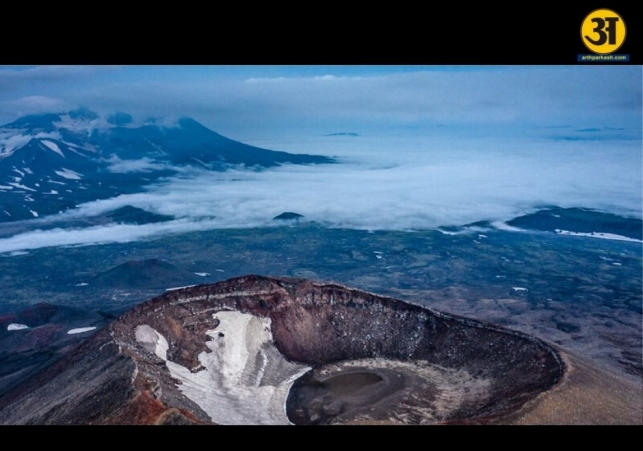
What makes Kamchatka unique is the number of volcanoes it has. There are over 160 volcanoes in the region, and 29 of them are still active today. The earth’s crust here is constantly being pulled, pushed, and broken apart by tectonic movements. This makes the region beautiful but very dangerous.
Why earthquakes happen so often here
This recent quake happened because of what scientists call “reverse faulting.” This is a type of tectonic movement where one plate is forced over another. In this case, the Pacific Plate is moving towards the west-northwest, and it is going under the North American Plate. This creates a lot of stress under the Earth’s surface. When this stress becomes too much, the crust breaks and an earthquake happens.
According to the US Geological Survey (USGS), this part of the Pacific moves about 77 millimetres every year. That might not sound like a lot, but over years and decades, this slow movement builds up a lot of pressure. When it’s finally released, the result can be a powerful earthquake.
This time, the quake’s epicentre was located 136 kilometres southeast of Petropavlovsk-Kamchatsky, a major city in the region. Fortunately, the quake happened far enough from populated areas to avoid heavy destruction. But the tremor was still strong enough to cause concern across the Pacific.
The Japanese Meteorological Agency issued a warning that tsunami waves of up to 1 metre could reach Japan. The US Tsunami Warning Centre also issued alerts for Alaska’s Aleutian Islands and other Pacific regions, predicting waves as high as 3 metres in some Russian coastal areas.
ALSO READ: India holds strategic cards as Trump’s rhetoric escalates
ALSO READ: Forensic clue cracks case: Inside the probe that linked guns to Pahalgam attack
Living with fear in a stunning landscape
Kamchatka is known for its incredible natural beauty—towering volcanoes, deep valleys, hot springs, and wild rivers. It’s a place of wonder, but it comes with a cost. People living there understand that life in such a place means being ready for sudden disasters.
According to the Russian Academy of Sciences, this was the strongest earthquake in the region since 1952. That year, an even larger quake of magnitude 9.0 triggered a destructive tsunami. Memories of past disasters often remind residents and authorities to stay alert.
For people in Kamchatka and other Ring of Fire regions, this event is another wake-up call. Despite all modern technology, nature can still surprise us with its power. Governments in earthquake-prone areas must continue investing in early warning systems, disaster education, and emergency response plans.
This earthquake is not an isolated incident. It is part of a larger pattern of geological behaviour that will likely continue for centuries. Kamchatka and other parts of the Ring of Fire will remain under constant threat of earthquakes and volcanic eruptions.
Instead of ignoring the dangers, the world must learn from each tremor. Whether it’s improving warning systems, strengthening buildings, or educating communities, these steps can save lives. Kamchatka's beauty is undeniable, but so is its risk—and preparing for both is the only way forward.
Related News